Week 22:
The bit where I introduce:
I don’t think you can spend much time in Christian circles, especially online, without coming across debates about women and leadership in the church. Don’t worry, I’m not planning on solving that debate here!
What I am interested in is looking at examples in the Bible and seeing how curiosity might help us understand some of these conversations a little better. Esther would probably be one of the first women many of us think of.
Most women I know who have faith in God desire His favour. The difficult part is realising that favour often comes with responsibility.
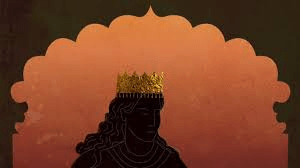
We remember Esther as a queen, but before she wore a crown, she was an orphan. Before she saved a nation, she faced fear. Before she experienced victory, she wrestled with uncertainty.
Esther’s story reminds me that God’s favour isn’t necessarily about comfort; it’s about purpose. God positioned her in a place of influence so she could make a difference when it mattered most. Her story challenges me to trust God’s providence even when I can’t see Him working.
The bit where I refer to the Bible and ask a few questions:
Esther chapter 4 is our focus this week.
Fun fact: God is never mentioned in the entire book of Esther.
When I revisited this story, I discovered far more twists and themes than I remembered. I knew the main storyline and the key characters, but I found myself noticing tensions I’d overlooked before.
God isn’t mentioned, which feels strange considering the Bible is supposed to be about God, right?
And yet, throughout the story, His fingerprints seem to be everywhere.
We don’t know who wrote Esther, but the author was clearly a gifted storyteller. The book is full of unexpected twists, reversals and moments of tension. Honestly, it would make a brilliant movie. (P.S there is one)
The main characters seem straightforward enough at first: Esther the courageous queen, Mordecai the faithful cousin, and Haman the villain.
But as I dug a little deeper, things became less clear-cut.
Esther is often presented as a heroine, but she doesn’t fit neatly into that category. We never hear her openly pray. We never hear her worship. She enters a beauty competition, hides her Jewish identity and marries a pagan king.
Mordecai isn’t entirely straightforward either. His refusal to bow to Haman appears courageous, but some commentators suggest it may also have contributed to escalating the conflict.
That made me wonder:
Why does the Bible present these characters with all their complexity?
Why not give us spotless heroes?
Why leave us wrestling with their choices?
The more I studied Esther, the more I realised she isn’t a hero because she is morally perfect. She becomes a hero because she remains faithful in the middle of an imperfect situation.
One commentary put it this way:
“And so the story doesn’t seem to put them forward as impeccable moral examples, nor does it endorse all their behaviour. However, they are presented as models of trust and hope during terrifying circumstances.”
That observation really stayed with me.
The theme that struck me most is that God worked through Esther, not because she was perfect, but because He had a purpose.
Her story reminds us that life can become messy. We make mistakes. We compromise. We wrestle with fear. Sometimes hope feels distant.
Yet God remains committed to His purposes.
Perhaps that’s one of the most comforting truths in Esther. The story isn’t ultimately about impressive people doing impressive things for God. It’s about God accomplishing His purposes through ordinary, flawed people.
And honestly, that’s good news for all of us.
Earlier I mentioned women and leadership.
As a woman who has served in leadership, one thing Esther reinforced for me is how often women disqualify themselves.
Past mistakes.
Past failures.
Not feeling qualified enough.
Not feeling spiritual enough.
Not feeling “good enough.”
Esther certainly wasn’t perfect.
In many ways, she wasn’t the obvious candidate.
Yet when the defining moment came, she trusted God and stepped forward.
That’s one of the most important themes that stands out to me.
I think there’s a difference between being a perfect example and being faithful in the place God has called you.
Women in leadership, whether in church, ministry, business or family life, often serve in complicated environments where values clash and difficult decisions must be made.
Esther’s lesson isn’t “be perfect.”
It’s trust God’s providence.
Act courageously.
Use your influence for the good of others.
Trust that God can work even through imperfect circumstances and imperfect people.
Because in the end, Esther wasn’t perfect.
And that’s precisely the point.
We don’t put our faith in imperfect heroes.
We put our faith in a perfectly faithful God.
The bit where you get to think about stuff: Questions for the week.
Do you expect Christian leaders to be perfect? How does Esther’s story challenge your assumptions about who God can use?
Looking back on your life, can you identify a time when God’s providence was at work behind the scenes, even though you couldn’t see it at the time?
How could you use your current position, influence, or gifts to serve others “for such a time as this”?
 Unfinished Faith: Relearning God.
Leave a comment